
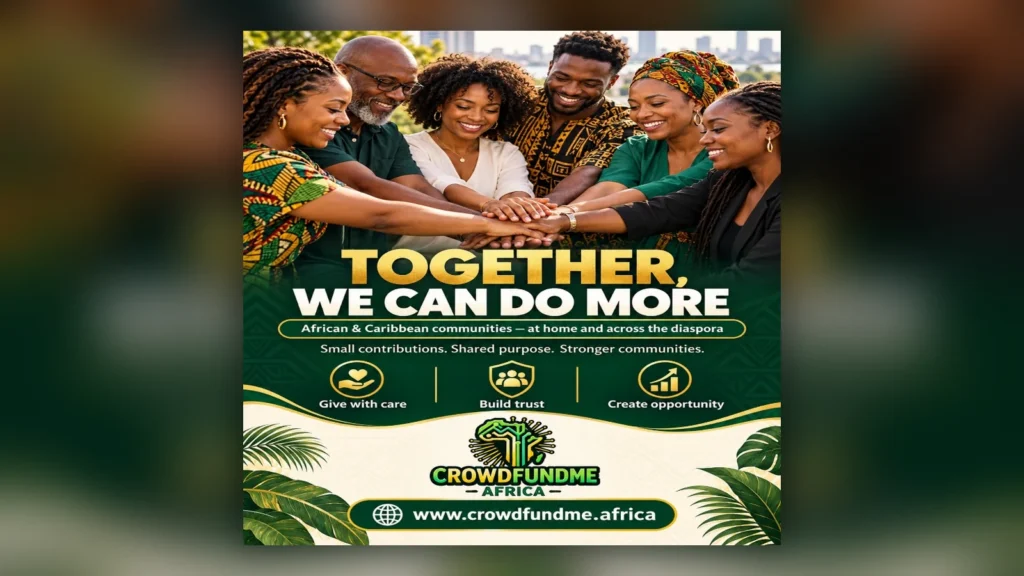
Connecting African and Caribbean communities in the diaspora and back home.
A student needs help completing their education. A family faces an unexpected emergency. A community organisation wants to repair a building or provide meals for vulnerable neighbours. Each situation is different, but they share one need: people willing to come together and help.
For African and Caribbean communities, crowdfunding offers a way to organise that support across borders. It allows relatives, friends, colleagues and well-wishers to contribute towards a shared purpose, wherever they live.
Its strength comes from the community behind it—the relationships, trust and collective effort that turn an appeal into meaningful action.
Building on a Tradition of Mutual Support
Supporting one another is familiar to many African and Caribbean families. Community associations, faith groups, hometown networks and informal collections have long helped people respond to hardship and pursue shared ambitions.
Online crowdfunding can extend that spirit of cooperation. An appeal that once circulated within one neighbourhood can now reach relatives abroad, former classmates, professional networks and people who care about the same cause.
Technology provides the connection. People provide the compassion, judgement and commitment.
Connecting the Diaspora With Communities Back Home
Distance can make it difficult to know how to help. Someone living abroad may want to support a project in their country of origin but need a clear explanation of the purpose, costs and people responsible.
A well-prepared crowdfunding campaign can bring those details together. It can explain the problem, describe the proposed response and give supporters a link they can share.
That connection should work in both directions. People in the diaspora also experience bereavement, financial hardship and unexpected emergencies. Living overseas does not mean someone is financially secure or has an extensive support network nearby.
Community support should follow genuine need, wherever that need exists.
Why Small Contributions Matter
People sometimes hold back because they believe their contribution is too small to make a difference.
Yet collective giving works by bringing manageable amounts together. If 200 people each contribute £5, they raise £1,000 before any applicable fees. The same principle applies in other currencies: participation can spread the responsibility across a wider group.
No one should feel pressured to donate beyond their means. A healthy culture of giving respects personal circumstances and welcomes voluntary contributions.
Those who cannot give money can still help by sharing an authorised appeal, introducing potential supporters, volunteering or offering useful skills.
Supporting Opportunity as Well as Emergencies
Community fundraising can help respond to urgent hardship, but its potential extends further.
African and Caribbean communities can also come together around clearly planned projects such as:
- Education, training and learning materials.
- Community buildings and local facilities.
- Youth programmes, sport and creative activities.
- Charitable outreach and practical assistance.
- Cultural projects that preserve and share heritage.
- Community initiatives with clear goals and public benefit.
Supporting these efforts gives people a chance to participate in something they want to see succeed.
Every campaign should explain what contributions mean. A donation does not automatically give someone ownership, repayment rights or a financial return.
Trust Makes Crowdfunding Work
Shared identity can encourage people to listen, but it should never replace accountability.
A compelling story needs clear information behind it. Who is organising the campaign? How much is needed? What will the money pay for? Who will receive it? What happens if the target is not reached?
Organisers should provide a realistic budget, explain relevant fees and share appropriate progress updates. If circumstances change, supporters should hear about it.
Donors also have a role. Before giving or forwarding an appeal, check its source, confirm the organiser’s connection to the cause and ask questions where information is unclear.
Transparency protects both the people asking for help and those choosing to give.
Preserving Dignity When Asking for Help
Seeking support should not require someone to surrender their privacy.
Fundraisers should obtain permission before sharing another person’s story or photograph. Children’s information, medical details and sensitive documents require particular care.
An honest appeal can explain a need without humiliating the person involved or publishing every painful detail. Photographs and personal stories should help people understand the purpose, with the knowledge and agreement of those featured.
Respect also means avoiding guilt, exaggerated claims or promises that cannot be kept. Giving should be an informed and voluntary choice.
Moving From Sympathy to Participation
When we encounter an appeal, it is natural to express concern and move on. Crowdfunding invites us to consider whether there is a practical step we can take.
That might be a modest donation, a thoughtful share or an introduction to someone who can help. Community leaders and organisations can contribute by checking appeals, helping organisers communicate clearly and encouraging responsible participation.
Support should continue after a campaign ends. Asking what was achieved, celebrating progress and learning from difficulties can strengthen future efforts.
A Community Culture That Crosses Borders
African and Caribbean communities are diverse. We have different languages, histories, beliefs and financial circumstances. Effective crowdfunding respects those differences while creating opportunities to cooperate.
At CrowdfundMe.Africa, we believe community fundraising should make genuine needs and worthwhile projects easier to discover, understand and support. That purpose depends on responsible organisers, informed donors and respect for the people at the centre of each appeal.
Our shared strength grows when compassion is matched by action—and action is supported by trust.
To learn more about community crowdfunding, visit www.crowdfundme.africa.