Launching your fundraising campaign is an important first step, but the real work begins after the campaign goes live.
One of the biggest mistakes fundraisers make is publishing a campaign and then waiting for strangers to discover it.
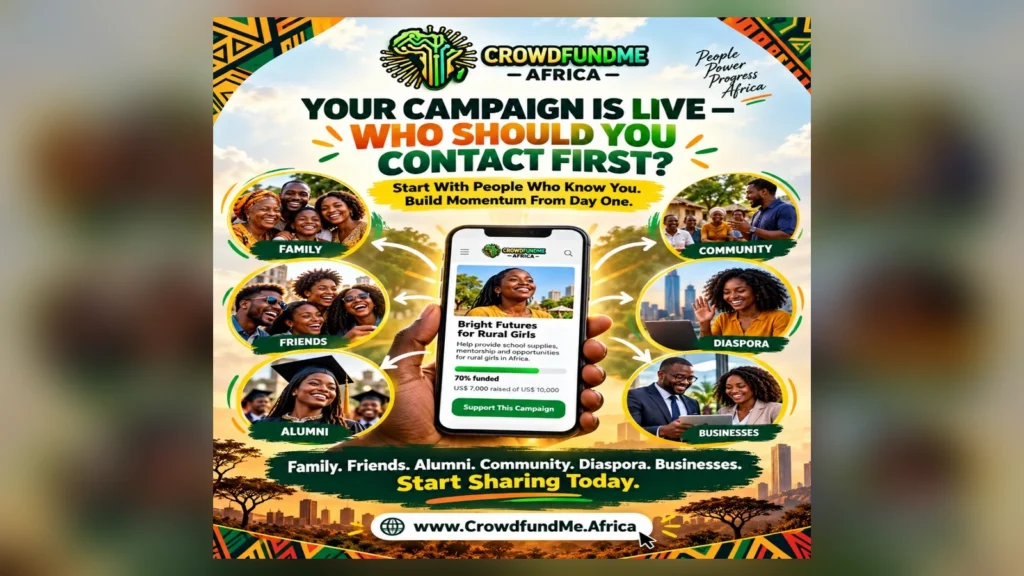
Crowdfunding usually works best when you begin with people who already know you, trust you, understand your cause, or can introduce you to others.
Your first supporters can help create the early momentum that makes a campaign look active and credible.
For fundraisers using CrowdfundMe.Africa, here are the first 10 types of people you should contact.
1. Close Family Members
Start with the people closest to you.
This may include:
- Brothers and sisters
- Parents
- Cousins
- Uncles and aunts
- Adult children
- Close extended relatives
Family members are often your first natural supporters because they already know you and understand your circumstances.
Even if they cannot donate much, they may be able to share your campaign with others.
Do not assume they already know about your fundraiser.
Send them the campaign link directly and explain what you are trying to achieve.
2. Your Closest Friends
Good friends are often among the first people who can help you build momentum.
Contact friends who know your character and understand why the campaign matters.
A personal message is better than simply dropping a link into a group.
You can say:
“I have just launched a fundraising campaign for [cause]. I would really appreciate your support. Any amount helps, and if you cannot donate, please kindly share the campaign.”
Simple. Respectful. Clear.
3. Former Schoolmates and Alumni
Your old school, university, college or training network can be very powerful.
People often feel a strong sense of connection with former classmates.
Contact:
- Secondary school classmates
- University alumni
- Professional training colleagues
- Former course mates
- Old student associations
Do not just ask them for money.
Explain the cause and ask them to share the campaign within their wider alumni network.
One former classmate may introduce you to dozens of new supporters.
4. Current and Former Colleagues
Workplace relationships can become valuable fundraising relationships.
Consider contacting:
- Current colleagues
- Former colleagues
- Managers
- Professional contacts
- People you have worked with on projects
Again, use a personal message.
Someone who cannot donate may still be able to share your campaign with others at work.
5. Church, Mosque or Faith Community Contacts
Faith communities often have a strong tradition of helping people in need.
If your campaign is genuine and appropriate, consider contacting:
- Church members
- Pastors
- Religious leaders
- Mosque members
- Community welfare groups
- Faith-based organisations
Explain the campaign respectfully.
Do not pressure anyone.
Ask whether they would be willing to support or share the cause.
6. Community Leaders and Association Members
Local community networks can be extremely useful.
Think about:
- Residents' associations
- Village or hometown unions
- Cultural associations
- Community organisers
- Welfare groups
- Social clubs
These people may already have access to established networks.
A community leader sharing your campaign can sometimes reach far more people than you can reach alone.
7. Diaspora Contacts
For African fundraisers, diaspora contacts can be especially important.
Consider reaching out to:
- Family abroad
- Former classmates living overseas
- Professional contacts in the UK, Europe, America, Canada or elsewhere
- Diaspora associations
- Hometown groups abroad
Do not assume that diaspora contacts should give large amounts.
Invite them to support according to their ability.
Their biggest value may be helping your campaign reach new networks.
8. Previous Donors or Supporters
If someone has supported you before, they already understand your work.
These people should be treated with appreciation.
You might say:
“Thank you again for supporting my previous campaign. I have now launched a new fundraiser for [cause], and I wanted to share it with you in case you would like to support or share it.”
Never make previous donors feel obligated.
Past generosity should create gratitude, not entitlement.
9. Business Owners and Professional Contacts
Local businesses and professional contacts can also help.
Consider:
- Shop owners
- Entrepreneurs
- Business associates
- Accountants
- Lawyers
- Healthcare professionals
- Consultants
- Suppliers
Some businesses may donate.
Others may help promote the campaign.
Some may introduce you to potential sponsors.
The goal is not only money.
It is access to networks.
10. People With Strong Networks
This group is extremely important.
Some people may not donate much themselves, but they know many people.
They may be:
- Community organisers
- Social-media influencers
- WhatsApp group administrators
- Event organisers
- Religious leaders
- Professional association leaders
- Popular local figures
A well-connected person can sometimes be more valuable than a large donor.
If they share your campaign, your reach can grow quickly.
Why These 10 Groups Matter
The first stage of your campaign is about trust.
People who already know you are more likely to:
- Donate early
- Share your campaign
- Recommend it to others
- Defend your credibility
- Create social proof
When strangers later discover your campaign, they may be more comfortable donating because they can already see that others are supporting it.
This is why your first contacts matter so much.
Do Not Send the Same Message to Everyone
Personalisation matters.
Your message to your brother should not be identical to your message to a business owner.
Your message to an alumni group should not be identical to your message to a close friend.
Adapt the message.
Keep it human.
Contact People Individually First
Before posting everywhere publicly, contact your closest supporters personally.
This can help you secure your first few donations.
A campaign that already has visible support looks more active and trustworthy.
Ask for Two Things
Every time you contact someone, ask for:
1. A donation, if they can afford it
2. A share, whether or not they donate
For example:
“If you are able to donate, I would sincerely appreciate it. If you cannot, please help me by sharing the campaign with your network.”
This doubles your opportunity.
Do Not Be Afraid to Follow Up
People are busy.
If someone does not respond immediately, it does not always mean they are not interested.
A polite reminder after a few days can be appropriate.
Keep it short.
Do not pressure them.
Keep Track of Who You Contact
A simple spreadsheet can help.
You can track:
Name | Group | Date contacted | Response | Donated | Shared | Follow-up
This helps you stay organised.
The First 20 Supporters Can Be Crucial
Your first 10 contacts are important.
But your bigger goal should be to build your first 20, 50, or 100 supporters.
Each person can open another door.
One family member can share with ten relatives.
One classmate can share with an alumni group.
One business owner can introduce you to another business.
One community leader can share with hundreds of people.
This is how crowdfunding grows.
Your First Supporters Are More Than Donors
They are:
- Ambassadors
- Sharers
- Connectors
- Referrers
- Advocates
- Community builders
Treat them well.
Thank them.
Update them.
Keep them informed.
They can become long-term supporters.
Start Close, Then Expand
The smartest fundraising strategy is often:
Start with people who know you.
Then move outward.
Family.
Friends.
Colleagues.
Alumni.
Faith community.
Diaspora.
Businesses.
Organisations.
Wider public.
This creates a natural path of trust.
CrowdfundMe.Africa: Your Campaign Starts With Your Network
At CrowdfundMe.Africa, fundraisers should understand that launching a campaign is only the beginning.
Your success depends heavily on who you contact, how you communicate, and how consistently you share.
Do not wait for strangers to find you.
Start with the people who already know you.
Build early momentum.
Create trust.
Then expand your reach.
Contact people personally.
Ask respectfully.
Encourage sharing.
Follow up politely.
Thank every supporter.
Because your first 10 contacts could become the foundation of your entire campaign.
CrowdfundMe.Africa
Helping Africa Fund Africa — with support from the world.
Visit: www.CrowdfundMe.Africa