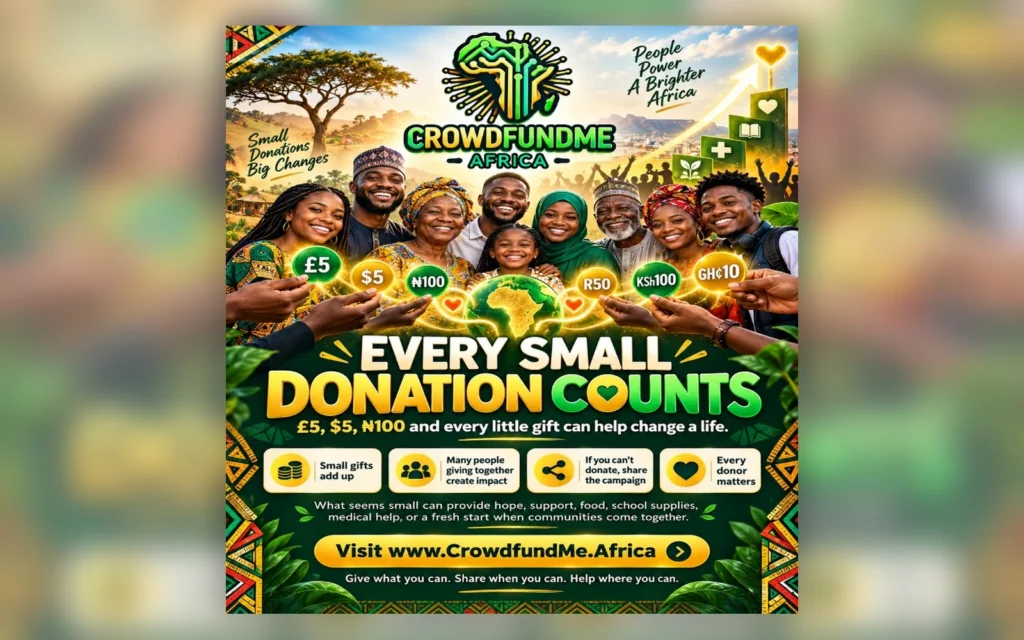
Never underestimate the power of a small donation. What feels small to you can become part of something life-changing for someone else.
When people see a fundraising campaign asking for thousands of pounds, dollars, naira, rand, shillings, cedis or other currencies, one thought often comes to mind:
“I only have a small amount to give. Will my donation really make any difference?”
The answer is yes.
At CrowdfundMe.Africa, we want donors and fundraisers to understand one of the most important principles of crowdfunding:
Every donation counts.
You do not need to be wealthy before you can help someone.
A £5 donation matters.
A $5 donation matters.
₦100, ₦500 or ₦1,000 matters.
R20 or R50 matters.
KSh100 matters.
GH₵10 matters.
€5 matters.
Whatever currency you use and whatever amount you can genuinely afford, your contribution can become part of something much bigger.
Crowdfunding Is About the Power of Many People
The word crowdfunding tells us exactly how the system works.
It is not necessarily about finding one wealthy individual who will provide all the money needed.
It is about bringing together a crowd of people, each contributing what they can, until those contributions collectively move a campaign towards its goal.
Imagine a fundraiser needs £5,000.
One person may not be able to give £5,000.
But:
1,000 people giving £5 each = £5,000.
Or imagine 500 people giving £10 each.
That also becomes £5,000.
This is the power of collective giving.
One donation may appear small when viewed by itself, but when hundreds or thousands of people participate, small donations can produce extraordinary results.
Small Money Is Still Real Money
Sometimes we dismiss small amounts because we regularly spend them without thinking very much about them.
Depending on where you live, a small amount might be spent on:
- A loaf of bread
- A bottle of water or soft drink
- Sweets or snacks
- A cup of coffee
- Mobile data
- Transport
- A quick takeaway
- An impulse purchase
- Something we may not even remember buying the following day
There is nothing wrong with spending money on ourselves.
But occasionally, we may decide:
“Today, instead of spending this £5 on something I don't really need, I am going to help someone.”
That £5 could become part of someone's school fees.
It could help towards medicine.
It could contribute towards food for a struggling family.
It could support transportation to a hospital appointment.
It could contribute towards rebuilding somebody's home.
It could help an NGO provide services within a community.
It could contribute towards equipment for a young entrepreneur.
It could support a child returning to school.
Your £5 alone may not solve the entire problem.
But it does not have to.
It only has to become part of the solution.
A Message to Donors: Never Be Embarrassed About Giving a Small Amount
Some people refuse to donate because they feel their contribution is too small.
They may think:
“The fundraiser is asking for £20,000. What difference will my £5 make?”
Please do not think that way.
A genuine fundraiser should appreciate every legitimate contribution.
If £5 is what you can comfortably afford, give £5.
If ₦500 is what you can comfortably afford, give ₦500.
If you can only afford a very small contribution, that contribution still represents something important:
You cared enough to participate.
You became part of somebody's journey.
You helped move the campaign closer to its target.
And your contribution may encourage somebody else to give.
That is important.
Never Put Yourself Into Financial Difficulty to Donate
There is another equally important message.
Giving should be voluntary and responsible.
You should never borrow money, miss essential household bills or put yourself into financial hardship simply to make a donation.
Give what you can reasonably afford.
For one donor, that could be £100.
For another donor, it might be £5.
For someone else, it may be nothing financially at that particular moment.
All circumstances are different.
Crowdfunding should be based on generosity — not pressure, guilt or embarrassment.
If You Cannot Donate, You Can Still Help
Money is not the only way to support a fundraising campaign.
If you cannot donate today, you may still be able to help by sharing the campaign.
Send it to:
WhatsApp contacts, family members, friends, Facebook groups, colleagues, former classmates, alumni networks, community organisations, churches, mosques, professional groups or diaspora communities.
Imagine you cannot afford to donate £5.
But you share a legitimate campaign with 20 people.
Three of those people donate £10 each.
Your simple act of sharing has helped generate £30 for the campaign.
That means you still contributed to its success.
Sometimes your network can be more valuable than your wallet.
A Message to Fundraisers: Never Look Down on a Small Donation
Fundraisers also need to understand this principle.
If someone gives you £5 towards a £20,000 campaign, do not think:
“It is only £5.”
Instead think:
“Someone chose to use £5 of their own money to support my cause.”
That deserves appreciation.
Every supporter should be treated with respect, whether they donated £5, £50 or £500.
A donor who gives £5 today may:
- Donate again later.
- Share your campaign.
- Introduce you to other donors.
- Encourage family members to participate.
- Become a long-term supporter of your organisation.
- Help spread awareness of your cause.
Never measure the importance of a supporter only by the size of their first donation.
Small Donations Can Create Momentum
There is also a psychological benefit to receiving many smaller donations.
Imagine visiting two campaigns.
The first campaign shows:
£20 raised from 1 donor.
The second shows:
£1,350 raised from 120 donors.
The second campaign immediately communicates something powerful:
People are participating.
When potential donors see other people supporting a cause, they may feel more confident joining them.
Small donations therefore do more than increase the financial total.
They can help build momentum, social proof and community involvement around a campaign.
Fundraisers Should Make Small Donors Feel Welcome
One mistake fundraisers sometimes make is concentrating only on wealthy donors.
Of course, large donations are extremely valuable.
But crowdfunding should remain accessible to ordinary people.
Instead of saying:
“We need people to donate at least £50.”
Consider saying:
“Whatever you can comfortably contribute — whether £5, £10, £20 or more — will be greatly appreciated.”
That statement makes people feel included.
You are telling potential donors:
Your support matters regardless of the size of your contribution.
The Mathematics of Small Donations
Consider what happens when communities work together.
100 people × £5 = £500
500 people × £5 = £2,500
1,000 people × £5 = £5,000
5,000 people × £5 = £25,000
The same principle applies in every currency.
The lesson is not that everybody must give exactly £5.
The lesson is that participation multiplied across a community creates impact.
Some people will give more.
Some people will give less.
Some people will simply share the campaign.
Together, all of these actions can help.
One Donation Can Become Part of a Bigger Story
Imagine a young student needs support with education expenses.
One donor contributes towards books.
Another contribution goes towards transport.
Someone else contributes towards tuition.
Another supporter helps with accommodation.
No individual donation necessarily pays for everything.
But together, many donors can help that student continue their education.
The same applies to medical campaigns.
One contribution may help towards medication.
Another helps towards transportation.
Another contributes towards treatment.
Another helps the family with essential expenses.
A fundraising target may look enormous when viewed as one figure.
But crowdfunding breaks that large challenge into many smaller acts of generosity.
Fundraisers: Explain What Different Contributions Can Help Achieve
One excellent way to encourage smaller donations is to show donors what different amounts could contribute towards.
For example, instead of simply saying:
“Please donate to our education project.”
You could explain:
£5 can contribute towards learning materials.
£10 can contribute towards school supplies.
£25 can support transportation or other educational costs.
The exact examples should always be truthful and appropriate to the campaign.
This makes a donation feel more tangible.
People understand how their contribution becomes part of the wider objective.
Never Shame People Into Giving
CrowdfundMe.Africa encourages responsible fundraising.
Fundraisers should never shame or embarrass somebody because they have not donated.
Avoid messages such as:
“You can afford to go out, so why can't you donate?”
Instead say:
“If you are able to contribute, we would sincerely appreciate your support. If you cannot donate, please consider sharing our campaign.”
That is respectful.
Good fundraising invites people into a cause.
It should not force them into it.
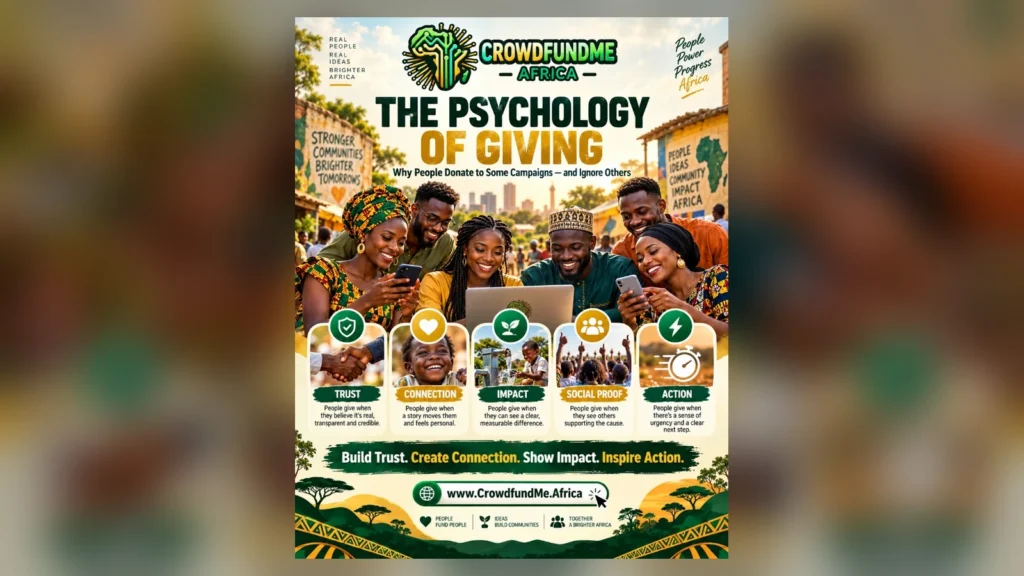
Donating Is Also About Human Connection
Behind every genuine fundraising campaign there is usually a human story.
A family.
A student.
A patient.
An entrepreneur.
A community.
An NGO.
A charity.
A disaster survivor.
A school.
A church or faith organisation.
A community development project.
When you make even a small donation, you are doing more than transferring money.
You are saying:
“I see your situation.”
“I care about what you are trying to achieve.”
“I want to contribute what I can.”
That human connection is one of the most powerful aspects of crowdfunding.
What If Millions of People Gave Something Small?
Africa has a population of more than a billion people, alongside a substantial global diaspora.
Imagine the potential impact when communities develop a stronger culture of responsible giving.
Not everyone needs to be a millionaire.
Millions of ordinary people giving manageable amounts to genuine causes can support enormous social impact.
This is one of the opportunities that digital crowdfunding creates.
It allows ordinary people to participate.
You don't have to wait for governments, major foundations, corporations or billionaires before communities can begin helping communities.
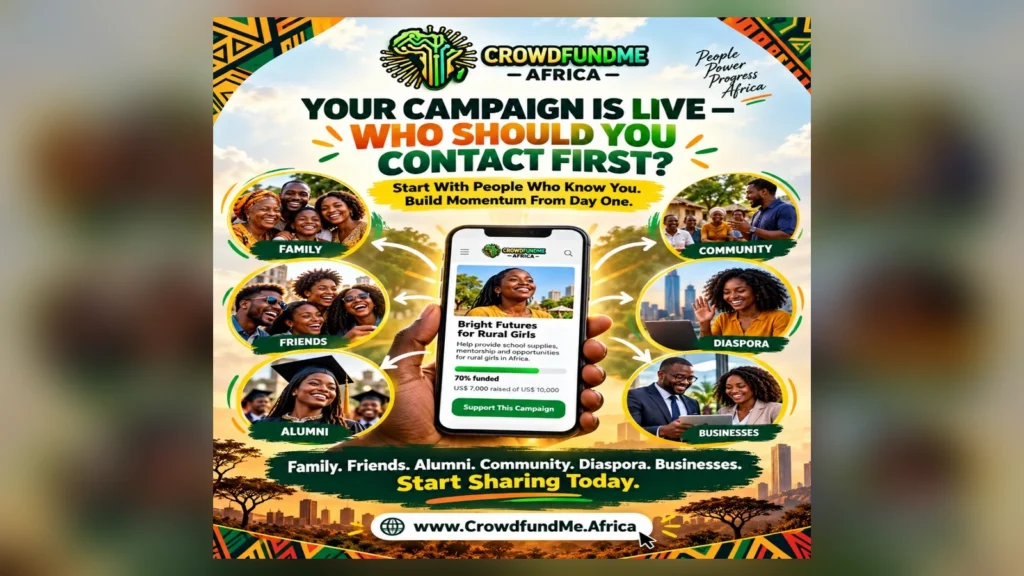
Fundraisers Should Also Start With Their Own Networks
Fundraisers should not expect strangers to carry the entire campaign.
Begin with people who already know you.
Your family.
Friends.
Colleagues.
Former schoolmates.
Alumni groups.
Professional contacts.
WhatsApp communities.
Church or mosque members.
Social organisations.
Community associations.
Diaspora contacts.
Encourage them to give what they can and, importantly, ask them to share the campaign.
Twenty people sharing your fundraiser with twenty more people can dramatically increase its reach.
Thank Every Donor
Never reserve your gratitude only for large donors.
Whether somebody contributes:
£5, $5, €5, ₦500, R50, KSh500, GH₵20 or another amount, say thank you.
A simple message can be powerful:
Thank you for supporting our campaign. Every contribution brings us closer to our goal, and we sincerely appreciate you being part of this journey.
People remember appreciation.
And supporters who feel valued are more likely to remain connected to your cause.
Every Drop Helps Fill the Bucket
There is an old principle that perfectly describes crowdfunding:
Many drops eventually fill a bucket.
One drop may seem insignificant.
But thousands of drops create something substantial.
Crowdfunding works in much the same way.
One £5 contribution.
Another £10.
Another £20.
Another £2.
Another £50.
Slowly, the campaign moves forward.
That is why fundraisers should never become discouraged simply because large donations have not arrived immediately.
Keep telling your story.
Keep sharing responsibly.
Keep updating supporters.
Keep thanking donors.
And continue inviting people to participate.
To Every Donor: Your Contribution Matters
The next time you see a genuine fundraising campaign and think:
“I only have £5.”
Remove the word “only.”
You have £5 that you are willing to contribute towards somebody else's future.
That matters.
And if thousands of people think the same way, the collective impact can be enormous.
You don't need to change someone's entire life by yourself.
You simply need to contribute towards the change.
To Every Fundraiser: Value Every Supporter
Never become so focused on reaching your fundraising target that you forget the people helping you reach it.
Behind every donation is a person who decided your cause deserved support.
Respect them.
Thank them.
Update them.
Show them the progress their contribution helped create.
And remember:
There is no such thing as a meaningless genuine donation.
Every contribution moves the campaign forward.
At CrowdfundMe.Africa, We Believe in the Power of Collective Giving
Crowdfunding is not simply about money.
It is about people helping people.
Families helping families.
Communities helping communities.
Africans supporting Africans.
The diaspora supporting communities back home.
And people around the world supporting causes they believe in.
Whether the contribution is small or large, everyone can become part of positive change.
£5 can matter.
$5 can matter.
₦100 can matter.
R10 can matter.
KSh100 can matter.
GH₵10 can matter.
Every genuine contribution can matter.
Because when thousands of small acts of generosity come together, small donations can create very big change.
Give what you can. Share when you can. Help where you can.
Every Donation Counts.
CrowdfundMe.Africa
Helping Africa Fund Africa — with support from the world.