Why Setting a Realistic Fundraising Goal Matters
When starting a crowdfunding campaign, one of the most important decisions you will make is how much money to ask for.
There is nothing wrong with needing £100,000, $100,000 or even more for a major project. Many African businesses, charities, community projects, schools, healthcare initiatives and social enterprises require significant funding.
However, the amount your project ultimately needs and the amount you should request in your first fundraising campaign may not always be the same.
A successful crowdfunding campaign should consider the project from the donor's point of view.
Before setting a large fundraising target, ask yourself:
- Is the amount realistic?
- Can supporters clearly understand why this amount is required?
- Can the project be divided into smaller stages?
- What can be achieved with the first level of funding?
- Can I demonstrate progress after reaching the first milestone?
A realistic fundraising goal can help your campaign build momentum, confidence and credibility.
What Is a Realistic Fundraising Goal?
A realistic fundraising goal is an amount that reflects what your project genuinely needs while also considering what your network and potential donors are reasonably capable of supporting.
For example, your complete project may require £100,000.
Instead of immediately asking the public for the full £100,000, you might begin with a target of £10,000 or £20,000 for the first phase.
Once that stage has been completed, you can show supporters what their donations achieved and begin fundraising for the next milestone.
This creates a fundraising journey rather than one very large request.
Break Large African Projects Into Fundraising Milestones
Milestone-based crowdfunding can make large projects easier for donors to understand.
Imagine you want to build a community learning centre in Africa with a total project cost of £100,000.
Your fundraising plan could look like this:
Phase 1: Planning and Land — £10,000
Funds could cover land preparation, permits, surveys and architectural planning.
Phase 2: Foundation and Construction — £20,000
The second fundraising stage could finance the foundation and early building work.
Phase 3: Building Completion — £30,000
This could cover roofing, plumbing, electrical work and structural completion.
Phase 4: Equipment and Furniture — £25,000
Funds could be used for computers, desks, chairs, teaching materials and other equipment.
Phase 5: Launch and Operations — £15,000
The final stage could support staffing preparation, landscaping and opening costs.
The entire project still costs £100,000.
The difference is that donors can now clearly understand the fundraising journey.
Why Smaller Fundraising Targets Can Encourage Donations
Consider how a potential donor sees your crowdfunding campaign.
If your fundraising target is £100,000 and only £300 has been raised, someone considering donating £20 may feel that their contribution will make very little difference.
Now imagine that your current fundraising goal is £10,000 and £7,800 has already been raised.
A donor may feel that their £20, £50 or £100 contribution can help push the project closer to its target.
Achievable fundraising milestones can create momentum.
And momentum is extremely important in crowdfunding.
Start Small and Build Donor Trust
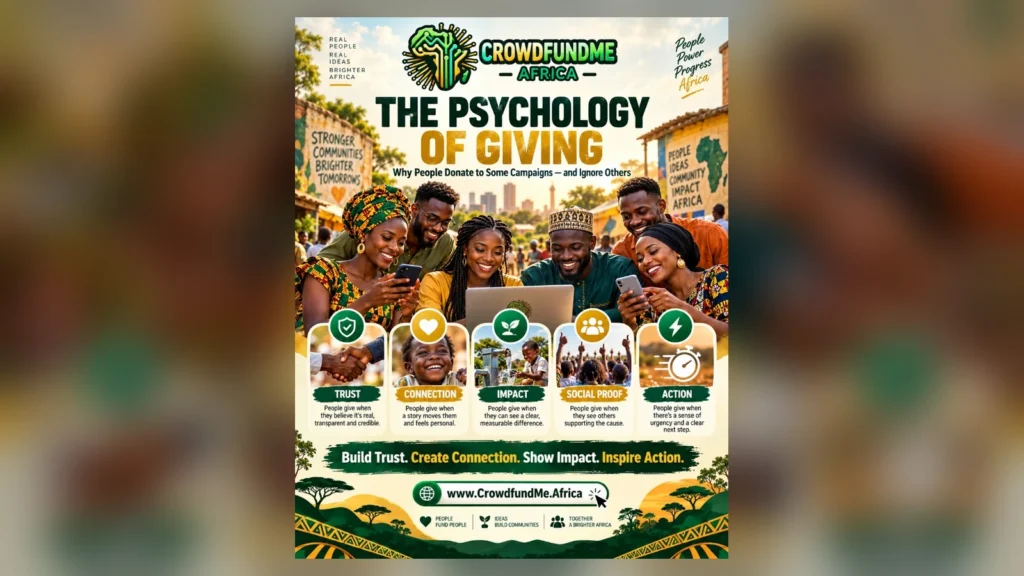
Trust is one of the foundations of successful crowdfunding in Africa.
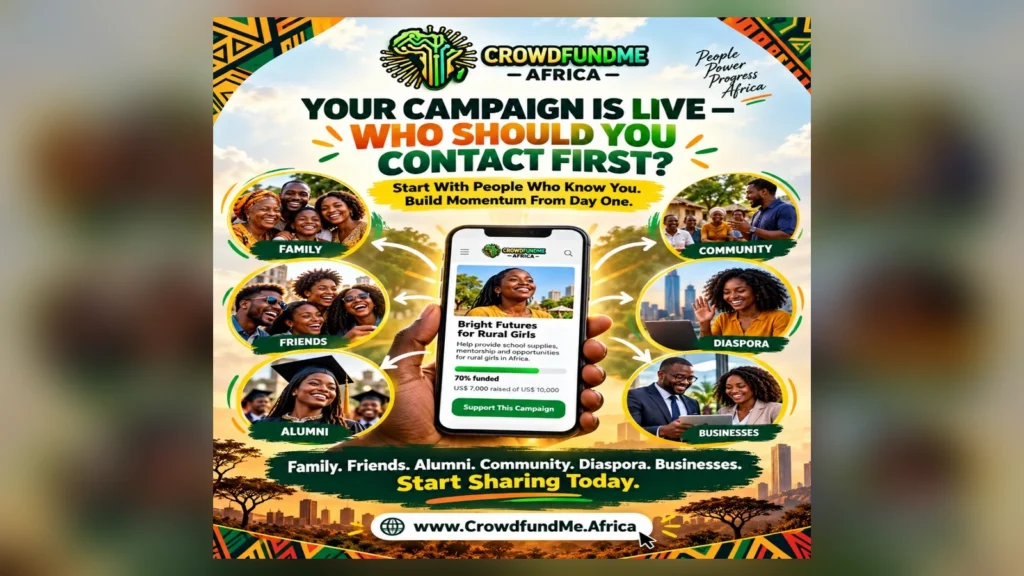
Before asking thousands of people to support your project, begin with the people who already understand you and your work.
Potential first supporters could include:
- Family and friends
- Colleagues
- Community members
- Professional networks
- Religious organisations
- Alumni associations
- African diaspora groups
- Local businesses
- Charities and NGOs
- Former clients or customers
Early donations can demonstrate that people already believe in your project.
This social proof can encourage other donors to participate.
Show Donors Exactly Where Their Money Will Go
Transparency can make a major difference to a fundraising campaign.
Instead of simply saying:
"Please donate to our project."
Explain the impact of different donation amounts.
For example:
£10 could provide educational materials for a child.
£25 could contribute towards food or essential supplies.
£50 could support equipment for a community project.
£100 could contribute towards vocational training.
£500 could sponsor an important stage of a larger development project.
These are only examples. Your campaign should use figures that genuinely reflect your project's costs.
When donors understand what their money can achieve, your fundraising appeal becomes more meaningful.
Your First Crowdfunding Campaign Does Not Have to Fund Everything
One common fundraising mistake is believing that the first campaign must finance the entire project.
It does not.
Your first campaign could simply fund the stage that proves your idea works.
Imagine an agricultural project requiring $100,000.
You might initially raise $15,000 to:
- Prepare the land
- Purchase farming equipment
- Buy seeds
- Employ initial workers
- Begin production
Once that stage is completed, you can provide donors with photographs, videos, updates and evidence of results.
Your next fundraising campaign is then supported by something extremely valuable:
proof of progress.
Potential donors are no longer being asked to support only an idea.
They can see what previous contributions have achieved.
How to Plan Your Fundraising Journey
Before launching your crowdfunding campaign, follow these steps.
1. Define the Problem
Clearly explain the challenge your project is addressing.
Potential donors should understand why your project matters.
2. Explain Your Solution
Describe what you intend to do and who will benefit.
Keep the explanation simple and specific.
3. Calculate the Real Cost
Prepare a clear project budget.
Avoid choosing a fundraising target simply because the number sounds impressive.
4. Divide the Project Into Stages
If the project is large, separate it into achievable milestones.
This helps donors understand your plan.
5. Set Your First Realistic Fundraising Goal
Choose an amount that allows you to achieve something meaningful without making the first campaign unnecessarily difficult.
6. Engage Your Existing Network
Your first donations will often come from people who already know you.
Ask them to support and share the campaign.
7. Explain How Donations Will Be Used
Transparency builds donor confidence.
Provide a clear breakdown wherever possible.
8. Share Regular Campaign Updates
Post photographs, videos, milestones and progress reports.
Let supporters know how the project is developing.
9. Celebrate Every Achievement
Do not wait until the entire campaign is completed.
Celebrate £1,000 raised.
Celebrate 25%.
Celebrate 50%.
Celebrate the first phase being completed.
Every milestone demonstrates progress.
10. Raise Funds for the Next Phase
Once your first milestone is completed, show donors what you achieved and explain what comes next.
This is how a long-term fundraising journey can develop.
Small Donations Can Create Big Results
Successful fundraising does not always require finding one wealthy donor.
A large number of smaller donations can create significant impact.
For example:
1,000 people donating £10 = £10,000
500 people donating £20 = £10,000
200 people donating £50 = £10,000
This demonstrates the power of community crowdfunding.
Your campaign does not necessarily need one person to provide everything.
It needs enough people who believe in the purpose of your project.
Common Fundraising Mistakes to Avoid
When raising money for an African project, try to avoid these common mistakes:
- Setting an extremely high target without explaining the budget
- Asking for money without clearly explaining the project
- Providing very little information about who is behind the campaign
- Launching a campaign without first building a supporter network
- Failing to provide regular updates
- Asking donors to trust you without showing evidence
- Treating crowdfunding as simply posting a link online
- Expecting strangers to fund an entire project immediately
- Failing to promote the campaign consistently
- Not breaking a large project into manageable fundraising stages
Crowdfunding requires communication, credibility and continuous promotion.
Be Ambitious, But Fundraise Strategically
Africa needs ambitious entrepreneurs, charities, innovators, community leaders and organisations.
You should not reduce the size of your vision simply because your project is large.
However, there is an important difference between having a £100,000 vision and immediately launching a £100,000 fundraising campaign.
Sometimes the strongest strategy is:
Think £100,000.
Plan £100,000.
But start by raising the first £10,000.
Use that money well.
Show the results.
Build credibility.
Then move towards the next stage.
Fundraising Is a Journey
Crowdfunding works best when supporters can follow your progress from:
Idea → Fundraising → Milestone → Evidence → Impact → Next Stage
Each successful stage builds confidence for the next one.
Your fundraising goal should therefore represent more than the amount of money you want.
It should represent the next realistic step towards achieving your project.
Start Your African Fundraising Campaign
Whether you are raising money for a business, charity, community project, education, healthcare initiative, creative project, agricultural project or social-impact cause, begin with a clear and realistic fundraising plan.
Dream big.
Plan carefully.
Set achievable fundraising milestones.
Tell your story.
Build trust.
Show your progress.
And take your supporters on the journey with you.
CrowdfundMe.Africa — Funding African Dreams, One Contribution at a Time.
Frequently Asked Questions
How much should I ask for in a crowdfunding campaign?
Your fundraising goal should be based on the genuine cost of your project and what you can realistically achieve during the campaign. Large projects can often be divided into smaller fundraising milestones.
Is it wrong to ask for £100,000 or $100,000?
No. Some projects genuinely require large amounts of money. The important question is whether your campaign clearly explains the need, provides a realistic budget and demonstrates why donors should trust the project.
Should I divide my fundraising project into stages?
For many large projects, yes. Breaking the campaign into milestones can help donors understand exactly what their contributions will achieve.
How can I encourage people to donate to my project?
Tell a compelling story, explain how donations will be used, begin with your existing network, provide regular updates and demonstrate progress.
Can small donations really fund a large project?
Yes. Crowdfunding is based on the principle that many smaller contributions can collectively create significant financial support.
Where can I raise funds for a project in Africa?
Crowdfunding platforms such as CrowdfundMe.Africa can help campaign organisers connect their fundraising causes and projects with supporters in Africa and the African diaspora.
Frequently asked questions
How much should I ask for in a crowdfunding campaign?
Your fundraising goal should be based on the genuine cost of your project and what you can realistically achieve during the campaign. Large projects can often be divided into smaller fundraising milestones.
Is it wrong to ask for £100,000 or $100,000?
No. Some projects genuinely require large amounts of money. The important question is whether your campaign clearly explains the need, provides a realistic budget and demonstrates why donors should trust the project.
Should I divide my fundraising project into stages?
For many large projects, yes. Breaking the campaign into milestones can help donors understand exactly what their contributions will achieve.
How can I encourage people to donate to my project?
Tell a compelling story, explain how donations will be used, begin with your existing network, provide regular updates and demonstrate progress.
Can small donations really fund a large project?
Yes. Crowdfunding is based on the principle that many smaller contributions can collectively create significant financial support.
Where can I raise funds for a project in Africa?
Crowdfunding platforms such as CrowdfundMe.Africa can help campaign organisers connect their fundraising causes and projects with supporters in Africa and the African diaspora.